High blood pressure or “hypertension” affects 25% of the United States population which is about fifty million people. It is a major risk factor for the development of cardiovascular disease. Hypertension causes damage to organs such as the heart, brain and kidneys. It can be an indication of other serious problems in the body especially the endocrine and renal systems. Hypertension is important to determine if one has high blood pressure as it does not cause clinical symptoms until changes in the organs has occurred. The exact mechanism of how high blood pressure causes such problems remains unclear. It is thought that the high pressure damages the medium size arteries supplying the various organs. A local inflammatory reaction causes swelling and clotting which affects that organ.
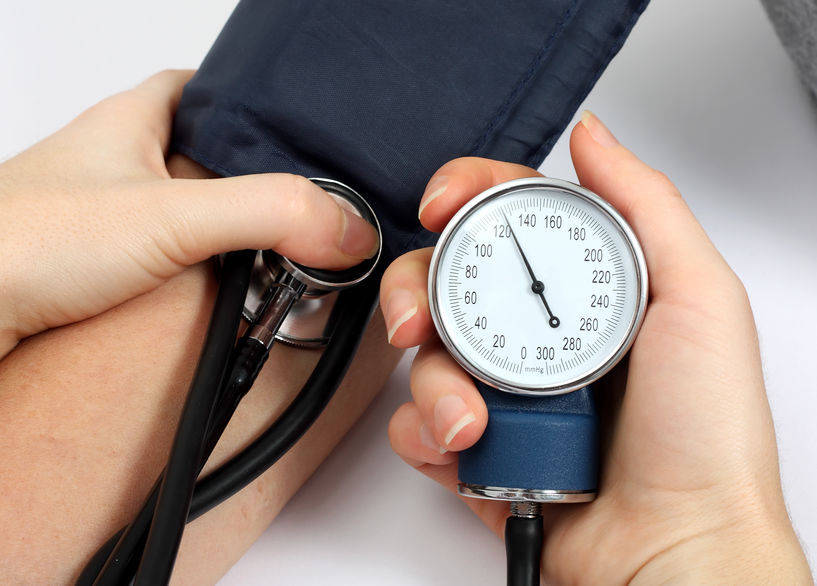
The diagnosis of hypertension is made by having an elevated reading on three separate readings, as pressure can fluctuate under normal circumstances. A blood pressure reading is made up of the systolic pressure (the top number), over the diastolic pressure (the bottom number). The pressure is created by the heart pumping blood against the artery walls. Systolic pressure correlates with the contraction of the heart. Diastolic pressure correlates with relaxation of the heart. A normal blood pressure is a systolic pressure of equal to or less than 120mmHg, and a diastolic pressure of equal to or less than 80mmHg. Stage one hypertension is considered anything between a systolic of 140-159mmHg and a diastolic of 90-99mmHg. Stage two is a systolic and diastolic greater than 160 and 100mmHg respectively. A pressure between normal and hypertension falls into a grey area that some practitioners consider “pre-hypertensive”, thus requiring monitoring and possibly at least preventive intervention.
 There are two general types of hypertension. Secondary hypertension is high blood pressure that is caused other disorders in the body. This accounts for a small percentage of people diagnosed with this problem. Once the root cause is determined, it can often times be treated and the pressure returns to normal. Primary hypertension (also called “essential hypertension”) occurs in about ninety percent of people with high blood pressure. No identifiable cause is determined in this type. Possible contributing factors are varied, therefore potential treatments are varied. Treatments may be geared toward the heart, arteries, water and salt levels, kidneys, nervous system and hormones. Modifiable risk factors include stress, being overweight, smoking, alcohol use and a diet high in salt. Diet contribution is critical and a careful consideration of the influence of poor diet must be considered in every case.